When Design Meets Power
Creativity
Graphic Design
Design Process

Carlos Murguia
COO - Partner

⊹
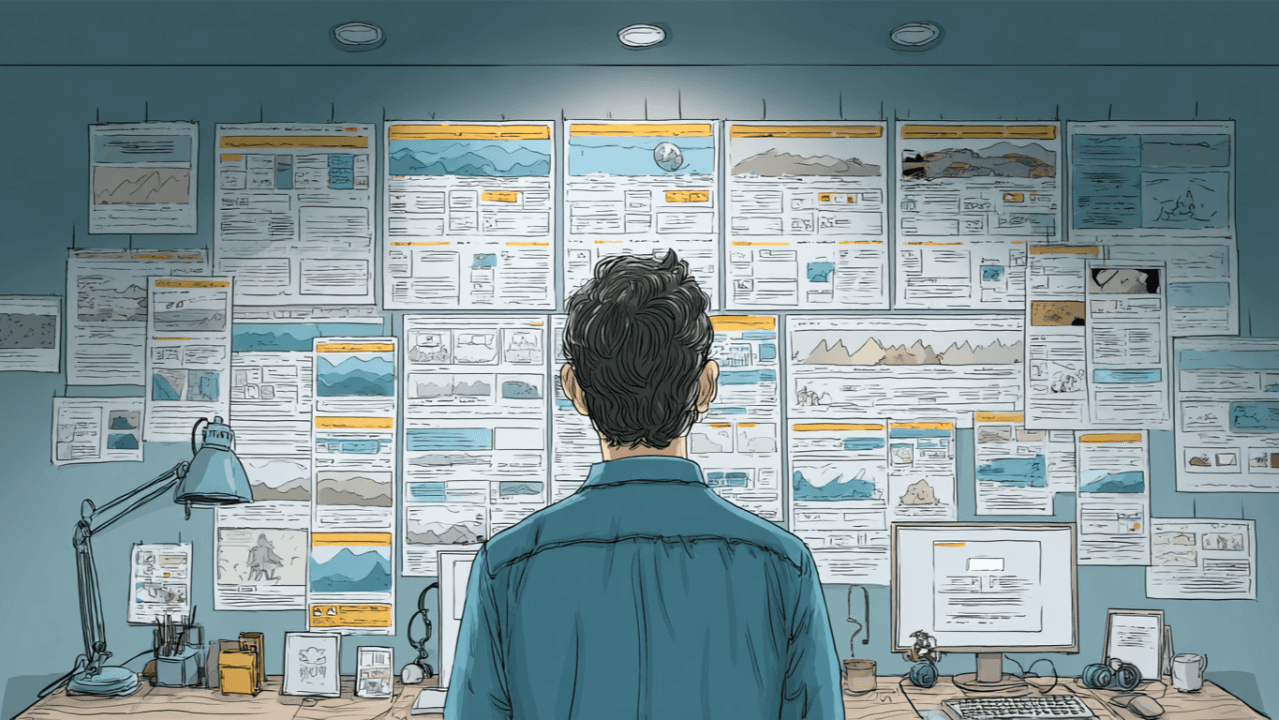
The pitch deck is on the screen. Around the table, executives shift in their chairs, eyeing the latest design proposal. The creative lead clicks to the next slide, revealing sleek graphics and a bold new color palette. There is a brief silence before the CFO asks, "How will this help us close deals this quarter?" Someone else wonders if customers will even notice the change. For a moment, the conversation leaves design behind altogether.
Strategic design is not simply about aesthetics; it is a growth engine that directly accelerates revenue and strengthens market status. Design rarely happens in isolation. Design occurs within organizations, where decisions have financial, strategic, and political implications. In these settings, discussions focus less on typography or color palettes and more on growth, positioning, risk, and performance. Senior leaders evaluate ideas from another perspective. They ask questions like, "Will this strengthen the brand?" Will it help us sell more effectively? Will it increase clarity for customers? Will it support the long-term direction of the business?
Designers often join these conversations from a craft perspective. They explain why work looks cleaner, more modern, or better balanced. While meaningful to designers, these qualities may not match the measurable outcomes executives seek. For example, instead of calling a design "cleaner," point out how clearer layouts can increase conversion rates. Highlight how simplifying a user interface can reduce support calls and speed up onboarding. When designers frame recommendations using improved metrics—such as conversion lift, reduced customer friction, or higher engagement—the conversation centers on executive triggers. Design terminology is valid in the field. However, translating it into language that emphasizes business impact is essential to influence decisions.
If these perspectives are not aligned, a disconnect occurs. Picture a redesign of a product interface. The design team focused on looks, without linking decisions to sales targets or customer needs. The new look received internal praise, but the launch caused confusion among longtime users and led to an increase in support requests. Sales slowed as customers hesitated, unsure of the changes. The company lost momentum in a key period. The project became a lesson in how inconsistent goals can hurt trust and revenue.
This misalignment shifts the conversation from purpose to preference. Without a clear strategic rationale, design decisions become vulnerable to subjectivity. When decisions rest on taste, the outcome is predictable. The person with the highest authority in the room becomes the final arbiter of what “looks right.” This moment — when design confronts power — reveals a structural weakness in the discipline. Design education emphasizes craft, including visual systems, composition, tools, and execution. These skills are essential. But less attention goes to rhetoric, persuasion, and purposeful framing—the skills needed to explain design in influential settings. Explaining is not separate from the work. It is part of it.
A strong design rationale connects visual choices to the company's values. It shows how hierarchy boosts comprehension. For example, usability tests reveal that task fulfillment rates can improve by up to 20%. Consistency strengthens recognition, raising unaided brand recall by 15% in typical brand studies. Clarity reduces user friction, cutting support requests by up to 25% after interface revisions. These details link design to outcomes leaders care about: differentiation, growth, and performance.
Research increasingly supports this connection. Studies by McKinsey & Company show that companies with strong design capabilities outperform peers. They achieve higher revenue growth and investor returns. Leading companies like Apple, Airbnb, and Spotify make design central to their business and credit it with a measurable impact. Impact includes loyalty, faster product launches, and a larger market share. Across industries, companies that value design do more than impress with aesthetics. They set new standards for growth, innovation, and performance. Design is not just aesthetics; it is strategic. But a strategy only has influence when it is understood.(https://www.mckinsey.com/capabilities/tech-and-ai/our-insights/business-value-of-design/overview?)
When designers can explain how visual decisions strengthen recognition, clarify product stories, or reduce friction in the customer journey, the conversation changes. Design stops being evaluated solely as decoration and becomes a strategic tool. At that point, the designer's role also becomes clearer.
Organizations operate using financial, operational, legal, and strategy-based language. Designers add a visual language. They understand how structure, hierarchy, color, and form shape perception and meaning. This effect goes beyond what spreadsheets or presentations can show.
This role cannot be replaced by tools or automation. AI can create images and layouts. Still, it does not grasp the cultural, strategic, or contextual impact of design within an organization. AI is not present during negotiations about priorities.
Designers do. When designers translate visual thinking into strategic language, they become essential participants in these conversations. They help organizations avoid decisions that weaken recognition, dilute positioning, or create market confusion. The strategic value of design not only lies in aesthetics but also in helping organizations see clearly.
Design and authority need not conflict. They can align when designers use strategic language, and strategy sees the value of visual thinking. Visual choices shape how people see a brand, product, or idea. Design is not decoration; it is direction.
Share This Article