Design has never looked better.
Brand Strategy
Visual Identity
Marketing Psychology

Carlos Murguia
COO - Partner

⊹
A subtle transformation is occurring within visual culture. Design standards have become exceptionally polished, yet increasingly indistinguishable.
Websites exhibit cleanliness, interfaces are minimal, presentations are precisely spaced, typography is refined, and color palettes are deliberately curated. Technically, the quality of execution across industries has improved significantly. And yet, much of it blends.
This observation does not constitute a critique of poor design; rather, it acknowledges that the baseline of aesthetic competence has increased. The primary concern is not unattractiveness, but rather uniformity. In a setting where all outputs are well-designed, mere competence is insufficient.
Brands are not failing because they look unprofessional.
They are fading because they look interchangeable.
The Psychology of Distinctiveness
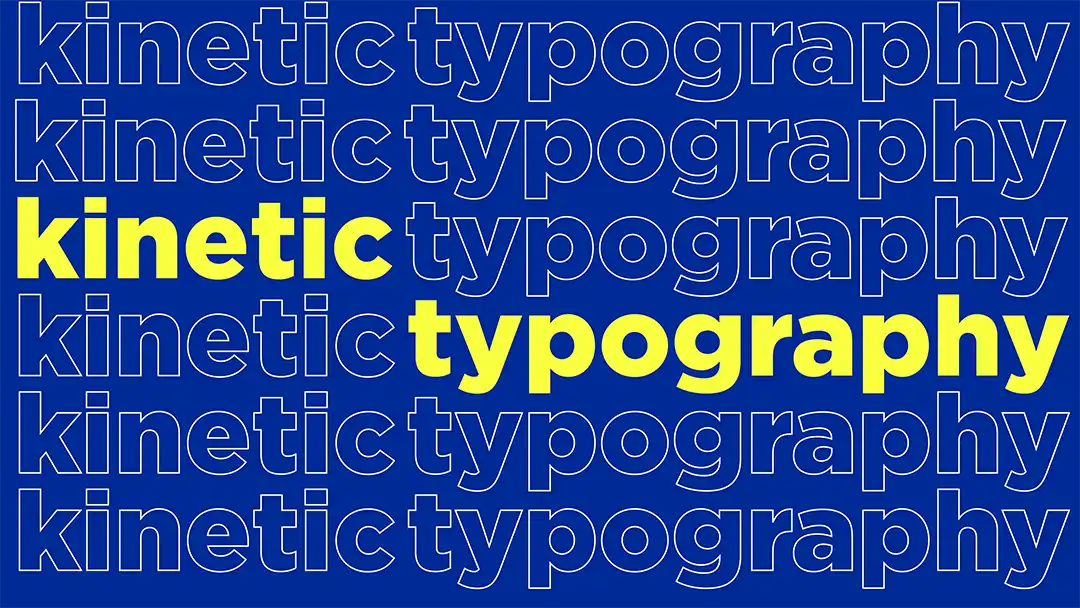
A well-established principle in cognitive psychology, the Von Restorff Effect, first described in 1933, proposes that when multiple similar items are presented together, the item that differs is more likely to be remembered. Distinctiveness enhances recall; elements that stand out are more likely to persist in memory.
When brands design to blend in, even with aesthetic excellence, they diminish their likelihood of being remembered.
The Era of Visual Convergence
In digital ecosystems, visual codes have notably converged. Common features include:
Hero layouts
Gradients
Typographic hierarchies
Icon styles
Safe color palettes centered on muted blues and neutrals
While none of these parts are inherently flawed and many are effective individually, collectively they result in visual compression.
Blending in has become the default strategy.
This convergence is partly driven by efficiency. Templates, design systems, and accessible platforms such as Canva have made visual communication more accessible, raising the baseline for quality. As a result, more individuals can produce polished materials rapidly, representing a major shift.
But templates also encode aesthetic decisions in advance. When thousands of brands share the same compositional structures, typographic pairings, and layout logic, the result is visual homogeneity at scale. The issue is not the tool itself — it is the absence of strategic deviation from it.
Safety vs. Distinctiveness
Blending in is often seen as safe, signaling professionalism by aligning with category norms. However, safety and distinctiveness seldom coexist.
Marketing science supports this argument. Research from the Ehrenberg-Bass Institute, particularly by Byron Sharp and Jenni Romaniuk, accentuates the importance of distinctive brand assets in building mental availability, defined as the likelihood that a brand is recalled in purchasing situations. Colors, symbols, shapes, and characters serve as memory shortcuts, functioning effectively due to their distinctiveness.
If a brand’s visual identity blends fluently with its competing set, those memory shortcuts diminish.
Within a crowded marketplace, blending in does not equate to neutrality; rather, it results in invisibility.
Clarity Without Conformity
This perspective does not advocate for chaotic or deliberately provocative design. Usability, accessibility, and clarity remain essential. However, clarity does not necessitate conformity, nor does professionalism require aesthetic uniformity.
The central consideration is not whether a design looks appealing, but whether it conveys a feeling of ownership and uniqueness.
When design decisions are mainly influenced by trends, category imitation, or template convenience, brand identity becomes diluted. Over time, differentiation relies solely on messaging and effectiveness metrics, yet even strong messaging often fails to compensate for visual invisibility.
Blending in may provide comfort by reducing risk and avoiding criticism, signaling that a brand adheres to conventional rules. However, brands are not remembered for merely adhering to established rules; they are recognized for establishing their own distinctive standards.
A Choice, Not an Accident
In a time when competent design is abundant, memorability necessitates intention. It requires resisting the gravitational pull of sameness. It requires asking not, “Does this look modern?” but “Does this look like us — and only us?”
Design does not need to be louder.
It needs to refuse to blend.
If brands are going to matter in environments defined by visual abundance, distinctiveness cannot be an afterthought. It must be a choice.
It is necessary to focus on design uniqueness once more.
Share This Article